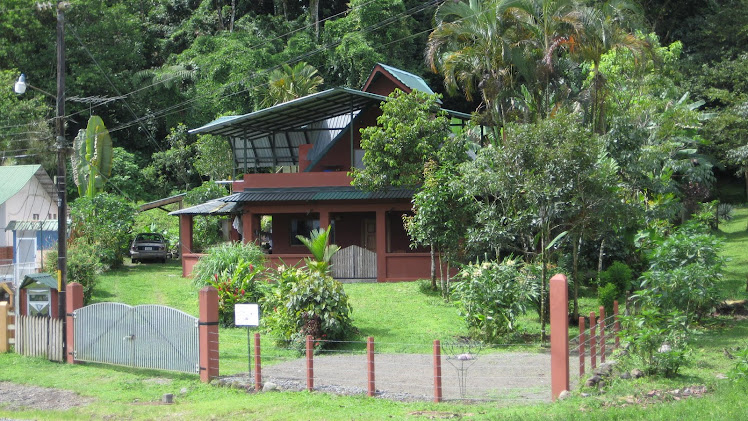
Michael Copeland founded Rock Costa Rica after falling in love with the Lake Arenal area and moving there from Northern California’s Bay Area. He developed a deep affection and respect for the Tico people and for the Costa Rican philosophy of pura vida (“the pure life”) – a philosophy characterized by strong community spirit, perseverance, resilience in overcoming difficulties, enjoying life slowly and celebrating good fortune.
Tuesday, July 5, 2011
Dailyshow
http://www.thedailyshow.com/watch/thu-june-30-2011/willie-geist---apology-chaperone?xrs=share_copy


Tuesday, May 10, 2011
The cost to ship my car to Costa Rica
date Tue, May 10, 2011 at 12:49 PM
subject Re: Benz
mailed-by gmail.com
signed-by gmail.com
hide details 12:49 PM (1 hour ago)
Greetings,,,
If you deliver the car to port Mantee,It will cost $1070....this is
inside container all the way into San Jose.This price includes all
docs and stamps to leave the U.S.At this end you have Port
charges,Mobilization fees,bill of lading,and tranlastion of bill of
lading fee,which run another $300 to $450.......To process the
car,,Put in national regestiry,machambo,tags,title will run you about
$775.......and the duty is as follows,,,,,,take the kelly blue book
price,divide that in 1/2,,,then add 1/3 of the shipping cost,,,,,that
is about what the duty will be,,,,,,
Any other questions let me know,,,there are 2 boats a week out of the
port for here,,the entire process will take 21 days.
Regards,
Jimmy
subject Re: Benz
mailed-by gmail.com
signed-by gmail.com
hide details 12:49 PM (1 hour ago)
Greetings,,,
If you deliver the car to port Mantee,It will cost $1070....this is
inside container all the way into San Jose.This price includes all
docs and stamps to leave the U.S.At this end you have Port
charges,Mobilization fees,bill of lading,and tranlastion of bill of
lading fee,which run another $300 to $450.......To process the
car,,Put in national regestiry,machambo,tags,title will run you about
$775.......and the duty is as follows,,,,,,take the kelly blue book
price,divide that in 1/2,,,then add 1/3 of the shipping cost,,,,,that
is about what the duty will be,,,,,,
Any other questions let me know,,,there are 2 boats a week out of the
port for here,,the entire process will take 21 days.
Regards,
Jimmy
Monday, May 9, 2011
environmentally sustainable agricultural
La Gran Vista Agricultural Ecological Farm near El Valle de General is a non-profit project that aims to spread awareness of environmentally sustainable agricultural methods to other farmers in the region.
The 12 acre farm is intended to provide an example of a farm that operates in a sustainable manner, removing the need to clear new areas of forest. The farm also aims to show others how the following methods can be employed successfully:
organic farming
soil regeneration and conservation
natural herbicides
natural pesticides
worm composting
biogas production
The 12 acre farm is intended to provide an example of a farm that operates in a sustainable manner, removing the need to clear new areas of forest. The farm also aims to show others how the following methods can be employed successfully:
organic farming
soil regeneration and conservation
natural herbicides
natural pesticides
worm composting
biogas production
Lake Arenal
Another location which is far more mysterious in origin can be found near the shores of Lake Arenal. Known for the majestic volcano that stands sentinel over the valley, Arenal became the focus of one Payson Sheets, an archeologist from the University of Colorado. Using NASA remote sensing technology, Sheets discovered the existence of remote footpaths both around and under the current Lake Arenal during these aerial surveys in 1985.
These footpaths, some dating back to 500 B.C., lifted a curtain on the life and culture of the ancients who used them as part of their daily existence. Sheets and other behavioral archeologists theorized that wandering bands may have lived around the volcano as early as 10,000 B.C. although a permanent settlement probably did not become established until around 2000 B.C.
These early settlers would move away during eruptions and then return to their crops and settlement when Arenal grew quiet. Much like the citizens of Guayabo, these lake residents vanished around 1400 B.C. The belief is that a plague, not the Volcano, is what ended their days.
These footpaths, some dating back to 500 B.C., lifted a curtain on the life and culture of the ancients who used them as part of their daily existence. Sheets and other behavioral archeologists theorized that wandering bands may have lived around the volcano as early as 10,000 B.C. although a permanent settlement probably did not become established until around 2000 B.C.
These early settlers would move away during eruptions and then return to their crops and settlement when Arenal grew quiet. Much like the citizens of Guayabo, these lake residents vanished around 1400 B.C. The belief is that a plague, not the Volcano, is what ended their days.
Monday, May 2, 2011
Two decrees spur household electrical generation
The Chinchilla administration has asked electrical distributors to come up with pilot plans so that customers can generate their own power and market the excess.
The Instituto Costarricense de Electricidad, known as ICE, has such a pilot project but the other electrical distributors, including the Compañía Nacional de Fuerza y Luz, have not embraced the idea.
The request from the central administration was in the form of two decrees issued March 15 and published just before Easter in the La Gazeta official newspaper. The significance of the decrees was largely overlooked, according to industry sources.
"Their impact is potentially huge, but I fear this potential will only be realized if the population of the country, and the electricity consumers of the distribution companies, are aware, concerned and get involved," said Jim Ryan of ASI Power & Telemetry, S.A. in Liberia.
“The ICE pilot program for net-metering which was introduced last year is a superb example of how a program can be constructed and implemented to support small-scale renewable energy generation," he said. "It would be ideal if the other distributors would take the ICE pilot program contract and program regulations and merely change the name of the company from ICE to Distributor X. In fact last year ICE offered their technical and program support to any Distributors willing to adopt their model program – none accepted ICE’s offer ”
Six months ago the Instituto Costarricense de Electricidad invited its customers to produce their own electricity and send the surplus to the national grid. The company restricted the offer to those generating systems that use renewable and clean sources, such as wind, solar, methane, and water. The inflow and outflow of electricity is measured as it comes and goes from the national grid, and the customer is credited with any electricity sent into the grid.
The few readers who took the energy company up on its offer reported that employees were helpful and anxious to make the connections.
Other readers complained that their electrical distributors were not allowing these types of connections. In addition to the Compañía Nacional, they are Empresa de Servicios Públicos de Heredia S. A. and Servicio Eléctrico Municipal de Cartago. These firms were named in the decree signed by President Laura Chinchilla and Teofilo de la Torre, minister of Ambienta, Energía y Telecomunicaciones.
The decrees give the firms three months to come up with a plan.
There is one catch to the current program of the Instituto Costarricense de Electricidad. No money is returned to the homeowner who produces the electricity. Instead the company awards credits against future electrical use.
The Chinchilla decrees, however, gave the price regulator, the Autoridad Reguladora de los Servicios Públicos, two months to come up with tariffs that would promote individual production of electrical power.
The president also asked the electrical institute to come up with as quickly as possible new financing options that would accelerate the development of this type of power generation.
The Instituto Costarricense de Electricidad said six months ago that it expected to generate about 5 megawatts from customers. The Chinchilla decrees mention 20 megawatts. Costa Rican laws are believed to allow the household production of 30 megawatts. Although exact figures depend on usage, a megawatt usually is defined as enough electricity to power 1,000 homes.
Said Ryan:
“Renewable energy generation of all sizes, both large and small, is important for the economic future of Costa Rica and all developed countries. And if we want fewer dams built on our rivers and fewer overhead transmission lines in our communities, then we must also consider installing our own small generation systems to take some of the load off of ICE and the distributors for generating and distributing power. But to have that option, we must now get consumers energized enough to help drag the distributors into the present and future reality.”
The Instituto Costarricense de Electricidad, known as ICE, has such a pilot project but the other electrical distributors, including the Compañía Nacional de Fuerza y Luz, have not embraced the idea.
The request from the central administration was in the form of two decrees issued March 15 and published just before Easter in the La Gazeta official newspaper. The significance of the decrees was largely overlooked, according to industry sources.
"Their impact is potentially huge, but I fear this potential will only be realized if the population of the country, and the electricity consumers of the distribution companies, are aware, concerned and get involved," said Jim Ryan of ASI Power & Telemetry, S.A. in Liberia.
“The ICE pilot program for net-metering which was introduced last year is a superb example of how a program can be constructed and implemented to support small-scale renewable energy generation," he said. "It would be ideal if the other distributors would take the ICE pilot program contract and program regulations and merely change the name of the company from ICE to Distributor X. In fact last year ICE offered their technical and program support to any Distributors willing to adopt their model program – none accepted ICE’s offer ”
Six months ago the Instituto Costarricense de Electricidad invited its customers to produce their own electricity and send the surplus to the national grid. The company restricted the offer to those generating systems that use renewable and clean sources, such as wind, solar, methane, and water. The inflow and outflow of electricity is measured as it comes and goes from the national grid, and the customer is credited with any electricity sent into the grid.
The few readers who took the energy company up on its offer reported that employees were helpful and anxious to make the connections.
Other readers complained that their electrical distributors were not allowing these types of connections. In addition to the Compañía Nacional, they are Empresa de Servicios Públicos de Heredia S. A. and Servicio Eléctrico Municipal de Cartago. These firms were named in the decree signed by President Laura Chinchilla and Teofilo de la Torre, minister of Ambienta, Energía y Telecomunicaciones.
The decrees give the firms three months to come up with a plan.
There is one catch to the current program of the Instituto Costarricense de Electricidad. No money is returned to the homeowner who produces the electricity. Instead the company awards credits against future electrical use.
The Chinchilla decrees, however, gave the price regulator, the Autoridad Reguladora de los Servicios Públicos, two months to come up with tariffs that would promote individual production of electrical power.
The president also asked the electrical institute to come up with as quickly as possible new financing options that would accelerate the development of this type of power generation.
The Instituto Costarricense de Electricidad said six months ago that it expected to generate about 5 megawatts from customers. The Chinchilla decrees mention 20 megawatts. Costa Rican laws are believed to allow the household production of 30 megawatts. Although exact figures depend on usage, a megawatt usually is defined as enough electricity to power 1,000 homes.
Said Ryan:
“Renewable energy generation of all sizes, both large and small, is important for the economic future of Costa Rica and all developed countries. And if we want fewer dams built on our rivers and fewer overhead transmission lines in our communities, then we must also consider installing our own small generation systems to take some of the load off of ICE and the distributors for generating and distributing power. But to have that option, we must now get consumers energized enough to help drag the distributors into the present and future reality.”
Subscribe to:
Posts (Atom)